
$0.06/kWh in 2024
Geothermal Energy: Harnessing the Earth’s Natural Power

David Message Underwriter, Energy
david.message@starr.com
Darryl Krobel Engineer, Energy
darryl.krobel@starr.comThe rise of geothermal energy
Geothermal energy is rapidly emerging from niche status to become one of the most promising sources of clean, always‑on renewable energy. As global demand accelerates – particularly driven from AI, cloud computing and data‑centre growth – geothermal offers scalability, reliability and a minimal surface footprint.
-
17 GW
global geothermal power capacity in December 2025
-
The US supplies 23%
of the world’s geothermal power generation
-
Global data‑centre power demand set to double to
~1,000 TWh by 2030
-
135 GW
of developable EGS capacity has been identified in the Great Basin, Southwestern US
What is geothermal energy?
Geothermal energy captures naturally occurring heat stored beneath the Earth’s surface and brings it to the surface through wells, using systems similar in architecture to the oil and gas industry.
Geo = Earth

 Thermal = Heat
There are three primary types of geothermal technologies:
-
Conventional Systems
Use naturally permeable reservoirs to extract hot brine or steam for heating or electricity. -
Enhanced Geothermal Systems (EGS)
Use stimulation to create artificial permeability in tight or dry hot rock, enabling heat extraction where natural reservoirs do not exist. -
Advanced Geothermal Systems (AGS)
Predominantly closed-loop systems that circulate a working fluid through deep sealed wellbores to absorb heat from surrounding rocks, removing the need to extract subsurface fluids.
The challenge: developing fit-for-purpose geothermal insurance products
Current products are often adapted from oil and gas legacy structures and do not reflect geothermal’s unique risks, technologies or operational characteristics.
Underwriting challenges include:
-
Lack of international standards for well design & construction and well control
-
While the total reported number of losses remains relatively low, a few large natural catastrophe (NatCat) claims can have a significant impact
-
Increasing third‑party liability exposure from EGS‑related induced seismicity
The
challenge
-
Concentrated development in volcanic or higher‑risk geographies
-
Legacy policy wordings (e.g. EED 8/86 - a standard insurance package policy form for Energy Exploration and Development in the offshore oil and gas industry) that do not sufficiently match the dynamics of a loss of well-control event for geothermal wells
-
Historically inconsistent maintenance standards in parts of the industry
Loss history:small industry, big losses
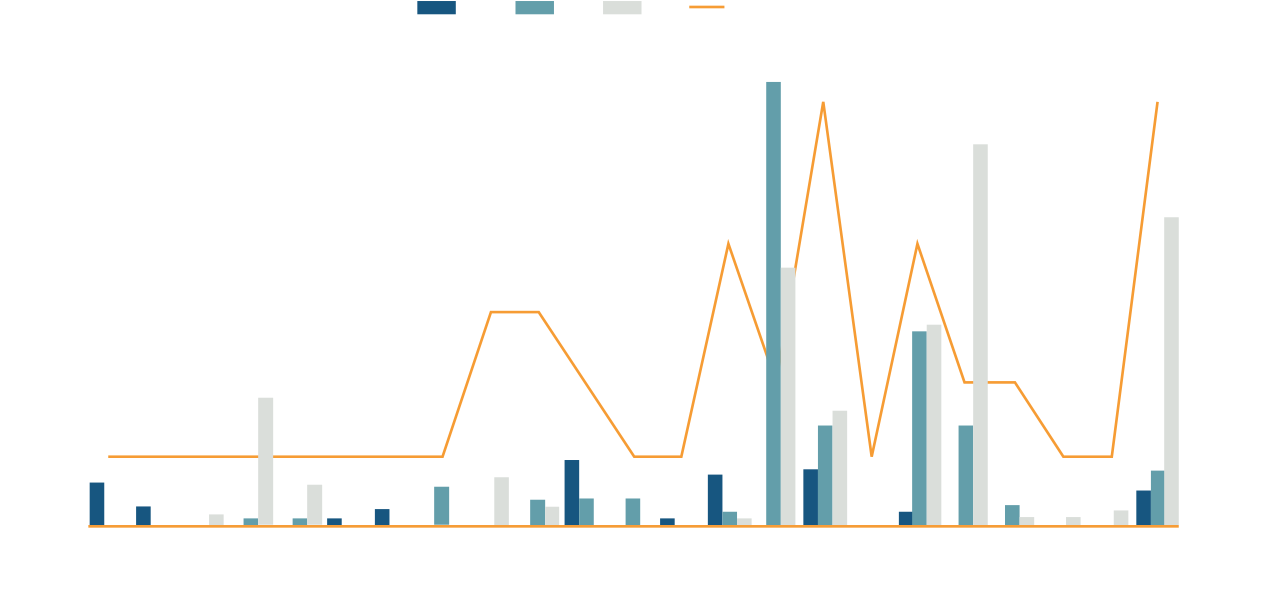
Despite low recorded claims frequency, a small number of large events can quickly overwhelm the current modest premium pool of the industry.
Geothermal Loss History (Global, WELD)
-
47 recorded geothermal losses since 2000 totalling over $800m
-
The costliest losses come from natural catastrophes (volcanoes and earthquakes)
-
The most frequent losses stem from turbine failures and blowouts
-
The 2018 eruption of Mt. Kilauea caused losses of $132m at the Puna Geothermal Venture
The standards gap - and the shift underway
Until recently, geothermal lacked a unified international risk‑classification and standards framework.
That is now changing.
In 2025, the International Association of Drilling Contractors (IADC) and the International Geothermal Association (IGA) jointly established an IADC Geothermal Committee to help define a global standard for geothermal drilling.
This includes:
-
A Geothermal Well Classification document (already published)
-
Geothermal Well Complexity Index
-
A Geothermal Well Control Guidelines document (recently published)
-
Additional working groups focused on well design, rig and equipment and drilling technologies – each responsible for drafting corresponding international guidelines.
Together, these efforts aim to create the shared technical language necessary for operators, insurers, banks and investors to align understanding and enable the scaling ambitions for the industry.
Emerging opportunities: why geothermal’s moment is now


1.The AI-driven surge in energy demand
Global data‑centre electricity consumption is expected to almost double from 2025 to 2030, driven by cloud computing and high-density workloads. Geothermal’s stable baseload and small surface footprint make it a natural fit for large‑scale tech partnerships (for example, the major project partnership announced by Meta and Sage Geosystems, a client currently underwritten and led by Starr).
2.Cost competitiveness
The Levelized Cost of Electricity (LCOE), a universal measure comparing renewable power generation technologies, has fallen significantly for geothermal relative to wind and solar:
3.Breakthrough technologies
Novel technologies have the potential to unlock vast regions for future geothermal development:
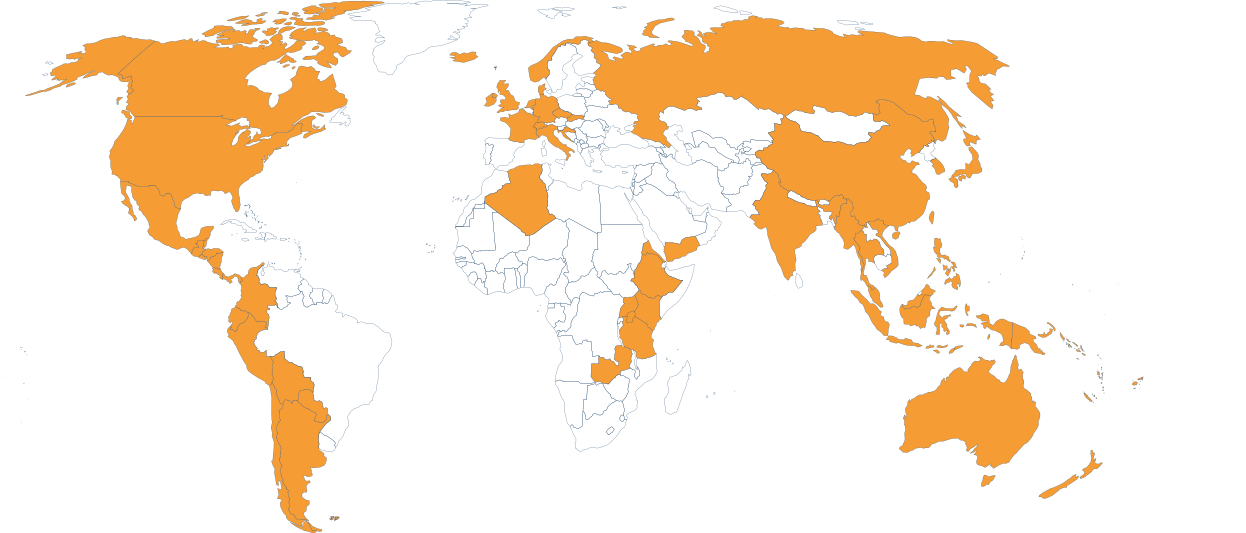
Top Locations for Geothermal Production
Laser drilling trials showing major cost‑reduction potential
Multi-loop AGS designs for higher heat extraction efficiency
With continued technology improvements and reductions in project costs, geothermal could meet up to 15% of global electricity demand growth to 2050 (Source: IEA)
Supporting geothermal growth through insurance
As standards mature and technologies advance, insurers can play a pivotal role in scaling geothermal safely and sustainably.
-

Better risk profiling
Differentiate complexity at project, site and well levels to align perception and reality of technical risk that underpins policy terms.
-

Tailored insurance products
Move away from oil & gas policy templates toward geothermal‑specific wordings that reflect geothermal nuances.
-

Risk reduction partnerships
Insurers with strong engineering expertise can actively support risk mitigation, making geothermal underwriting more seamless.
-

Enabling investment
Robust insurance frameworks attract investors and promote sector growth.
What insurers should consider
-
Assess geological, geographic and well‑execution risks using emerging IADC standards
-
Review drilling plans to anticipate operational challenges
-
Evaluate operator competency, maintenance history and well‑control capability
-
Align risk classification with tailored policy terms
Our Commitment
At Starr, we work closely with brokers and clients to support the safe and sustainable growth of geothermal energy. As a trusted lead market, we combine deep global energy expertise, technical insight and data-driven underwriting to deliver innovative and practical insurance solutions tailored to the sector's evolving needs. Our independence allows us to take a long-term view, build enduring partnerships and support our clients across the full lifecycle – from drilling and construction through to operations.
Starr’s Risk Engineer, Darryl Krobel, participates in the IADC Geothermal Well Control working group, contributing to the development of industry guidelines for geothermal well control. We also work with a leading US well control training provider to develop tailored insurance products and training for drilling operators and contractors.
In parallel, Starr is developing targeted endorsements and amendments to the EED 8/86 policy wording, working with legal specialists to ensure coverage is fit for purpose for geothermal drilling as the industry continues to scale.
Discover our products


Our Team
USA
warren.puffer@starr.com
Warren Puffer
Regional Vice President
USA
john.oneil@starr.com
John O’Neil
Regional Vice President
USA
Melissa.Serrano@starr.com
John O’Neil
Regional Vice President
USA
robert.kurtz@starr.com
Robert Kurtz
REGIONAL VICE PRESIDENT
USA
kathleen.murphy@starr.com
Kathleen Murphy
Regional Vice President
USA
hilary.schmidt@starr.com
Hilary Schmidt
Regional Vice President
USA
wayne.speeg@starr.com
Wayne Speeg
Regional Vice President
USA
kelly.geoghegan@starr.com
Kelly Geoghegan
Regional Vice President
USA
kelly.geoghegan@starr.com
Kelly Geoghegan
Regional Vice President
Our Other insights

Solar Solutions, Robotic Revolutions

Smarter Cars

The recovery economy: How insurance rebuilds, redevelops and creates resilience

What ships do in the shadows: The rise of the dark fleet

Deception on your dinner plate: Inside the world of food fraud
